


When Speed Took Flight — Literally
Imagine a street car with a spoiler so tall that an adult could pass underneath it without bending over. Sounds like science fiction? For millions of enthusiasts of classic American cars, this is simply reality — a reality called Dodge Charger Daytona e Plymouth Superbird. In the late 1960s and early 1970s, Chrysler Corporation decided that building fast cars wasn't enough. They needed to build the fastest cars in the world, both on NASCAR tracks and on the open roads of America. The result was a pair of machines that still make the heart of any enthusiast race at the speed of a Daytona straight.
The Context: The NASCAR Track Wars
To understand why the Daytona and the Superbird exist, we need to go back to the fierce battlefield of NASCAR in the late 1960s. Ford, Chrysler, and General Motors waged a relentless war for victories on the superovals—huge, fast tracks like Daytona Beach and Talladega, where aerodynamics made all the difference between win and loss.
Chrysler was losing ground to the aerodynamic Fords of Cale Yarborough and other drivers. Engineers in Detroit realized their models suffered from instability at high speeds and excessive air resistance. The solution? Completely redesign the nose of the cars, lengthen it in fiberglass, and install a rear stabilizer mounted on tall steel supports—the famous spoiler that would become the symbol of these legendary machines.
The Torpedo Nose and the Giant Airfoil
The aerodynamic modification was radical. The pointed snout, called nose cone, The design cut through the air much more efficiently than the original square hood. The raised rear spoiler—positioned outside the air turbulence created by the roof—generated real downforce at speeds exceeding 160 km/h. Together, these elements allowed the Charger Daytona to break the 200 mph (322 km/h) barrier at Talladega in 1969, with Buddy Baker at the wheel. It was the first time in history that a car had covered that distance on a closed track. A moment that is forever etched in the annals of American motorsport.
1969 Dodge Charger Daytona: The Pioneer
Released in 1969, the Dodge Charger Daytona It was the first of the two aerodynamic siblings to see the light of day. Based on the Charger 500, it received the elongated fiberglass nose, sealed rear windows with flush-mounted glass, and the iconic 58-centimeter-high spoiler. To homologate the car for NASCAR, Chrysler had to build at least 500 road-going units—ultimately producing 503.
The available engines were worthy of its extreme character: the 440 cubic inch block with the famous Six Pack (three two-barrel carburetors) or the legendary 426 cubic inch HEMI, an official 425 horsepower V8 — a number certainly underestimated by the engineers of the time for insurance and homologation purposes.
On the track, the Daytona was devastating. Richard Petty and Charlie Glotzbach used it to dominate the 1969 season, with memorable victories at Talladega and the Daytona 500 itself. The car was so superior that rivals knew they had to respond—and respond quickly.
Plymouth Superbird 1970: The Wild Bird
The answer came the following year, but this time from within Chrysler itself. Richard Petty, the King, had left Dodge for Plymouth in 1970. To keep him happy—and to have NASCAR's most popular driver racing in their colors—Plymouth created the Superbird. Based on the Road Runner, the Superbird shared the aerodynamic philosophy of the Daytona but with some subtle design differences.
The nose was even longer and less visually aggressive. The rear spoiler had a slightly different shape and was even higher. Plymouth produced around 1920 units for homologation—a much higher number than the Daytona, which today makes the Superbird proportionally more accessible in the collector's market, although it is still extremely valuable.
The HEMI and the .440 Six Pack: Heart of Iron and Fire
Like the Daytona, the Superbird could be equipped with the monstrous 426 ci HEMI or the 440 Six Pack. Examples with the HEMI are now the most sought-after and valuable, reaching six-figure prices at international auctions. But even the 440 models are absolutely brutal machines, with torque and a sound that few modern cars can replicate.
If you're a true enthusiast and are looking for your next American classic, then... Gallery of cars available on Autozilla It's the ideal starting point for discovering gems like these.
The End of an Era: NASCAR's Rules and the Exit from the Stage
The success of these machines was so overwhelming that NASCAR itself was forced to act. In 1971, the organization introduced new restrictions that heavily penalized large-displacement engines in so-called [the sport]. aero cars. Suddenly, the 426 ci HEMI in a Superbird was limited to an equivalent displacement of 305 ci for handicap purposes. It was the end of the line for these extraordinary creatures.
Ironically, their premature demise in competition transformed them into even greater objects of desire. Cars that in 1970 sat languishing on dealership shelves—too strange for the average buyer—became decades later some of the most coveted American classics on the planet.
Legacy and Collectible Value Today
Today, one Plymouth Superbird or a Dodge Charger Daytona In good condition, it's a solid investment and a piece of American history on wheels. Values have risen consistently over the last 20 years, and examples with HEMI and original documentation can easily exceed €200,000 to €400,000 at auction.
But you don't need an art gallery budget to enter this world. There are restored examples with 440 engines at more affordable prices, ready to be admired and driven. The key is knowing where to look and having trusted experts by your side who know the Californian market, where many of these cars have spent their lives sheltered from corrosion.
In Autozilla, We specialize precisely in this: importing the best American classics directly from California to Europe, with complete transparency and personalized support. If you have any doubts about which model is right for you, our service... personalized recommendations It was created to help every collector find the car of their dreams.
Find Your American Classic with Autozilla
The Dodge Charger Daytona and the Plymouth Superbird are more than just cars—they are monuments to audacious engineering, the American competitive spirit, and an era when brands built extraordinary machines simply because they wanted to be the best. Every aggressive line, every inch of that giant rear wing, tells a story of determination and innovation that no modern car can replicate.
If this world fascinates you as much as it fascinates us, don't hesitate to use ours. personalized search tool To find the classic American car you've always dreamed of owning. At Autozilla, your next adventure on wheels starts here.
We already have these in stock.
Public prices, with and without Portuguese registration.
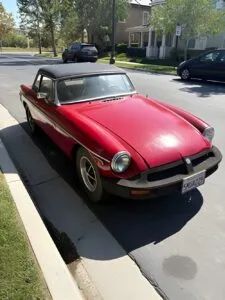 MG MGB 1978 — Runs and drives without any rust.15,500 €
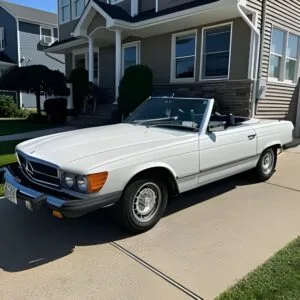 Mercedes-Benz 1978 — Classic in excellent condition.33,500 €
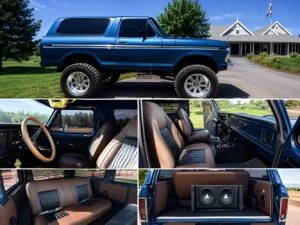 1978 Ford Bronco — 351 M400 engine, raised suspension, 5-speed manual transmission, 4x466,000 €
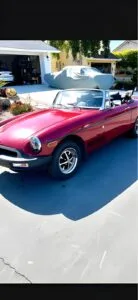 MG Midget 1977 — Convertible, running, in good condition.€19,000
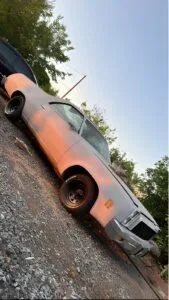 Chevrolet El Camino 1977 — Project with good bodywork and a 350 V8 engine.€17,000
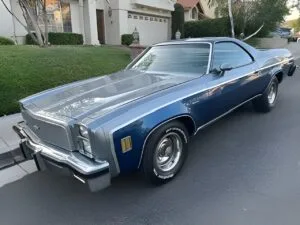 Chevrolet El Camino Classic 1977 — Complete restoration, 350 V8 engine, air conditioning€33,000
View all stock · Can't find the model? We'll look for it for you.