
Chevrolet Camaro 1st Generation (1967-1969): Complete Guide

The Birth of a Legend: The Camaro that Challenged the Mustang
There was an urgency in Detroit in 1966. Ford dominated the market for... pony cars With the Mustang since 1964, General Motors needed to respond. The answer was called... Chevrolet Camaro — and it arrived with such force, style, and power that it quickly became one of the most iconic automobiles in American history. For many enthusiasts, the first generation, produced between 1967 and 1969, represents the absolute peak of this legend. Perfect lines, brutal engines, and an aura of rebellion that no other car can replicate. If you've always dreamed of having a classic Camaro in your garage, this guide was written for you.
Design and Bodywork: Three Years, A Remarkable Evolution
The first generation of the Camaro was produced for only three years, but the aesthetic evolution between models was significant, which has a major impact on its current value.
1967 Camaro: The Stylish Newcomer
The 1967 Camaro arrived with long, flowing lines, heavily influenced by European design studies of the time. The horizontal grille, the integrated twin headlights, and the silhouette... fastback They created an imposing presence. Available as coupé e convertible, The first year of production is now considered the purest and most collectible of the series. The 1967 convertible versions consistently fetch the highest prices at auction.
1968 Camaro: Refinement and New Details
For 1968, Chevrolet introduced small but important updates: side marker lights integrated into the front guards (due to legal requirements), redesigned exterior mirrors, and improved interior finishes. The mechanics also evolved, with new engine options and the introduction of the package. SS 396 of the series. The 1968 is often considered the perfect balance between original design and the maturity of the line.
1969 Camaro: The Peak of an Era
The year 1969 brought the biggest aesthetic overhaul of the generation. The body became wider, more muscular, with more aggressive air intakes and a visual identity that would influence all future Camaros. It's no coincidence that... 1969 Camaro It is the most sought-after and most expensive model on the current collector's market. Production was also the highest in three years — more than 243,000 units — which guarantees greater availability of examples, although high-specification models are becoming increasingly rare.
Engines: From Frugality to Brutality
One of the great strengths of the first-generation Camaro was its extraordinary variety of engines, ranging from modest six-cylinder units to true racing monsters.
Base Motors
The entry-level versions used an inline six-cylinder engine. 3.8 liters with around 140 hp. Although not the preferred choice of collectors, these base-engine examples are now more accessible and represent an interesting entry point into the world of American classics.
SS Package: Super Sport
The package SS (Super Sport) It was the choice of most buyers who wanted real performance. It included the V8 engine block of 5.7 liters (350 ci) with 295 hp, or in the more powerful variant, the formidable 6.5 liters (396 ci) with up to 375 hp. The SS also came with enhanced suspension, improved brakes, decorative hood stripes, and exclusive emblems. Today, an original, documented Camaro SS is worth significantly more than an equivalent base version.
Z/28: The Racing Machine for the Road
For true purists, the Z/28 It's the Holy Grail. Created specifically to compete in the Trans-Am Series, the Z/28 used an engine... 4.9 liters (302 ci) With a high-compression engine producing an official 290 hp — a number universally considered underestimated by Chevrolet for insurance purposes — and featuring racing suspension, a four-speed Muncie gearbox, and larger Brembo brakes, the Z/28 was literally a race car with a license plate. Original examples are now extraordinarily rare and valuable.
Market Appreciation: An Investment with an Accelerator
The market for classic American cars has demonstrated remarkable resilience in the face of global economic uncertainties, and the first-generation Camaro is one of the most solid assets in this category.
Current Values by Version
The value depends heavily on the version, the state of preservation, and the original documentation. For reference, in the current American market:
- Camaro base model 1967-1969 In good condition: between €25,000 and €45,000
- Camaro SS 350/396 Well documented: between €50,000 and €90,000
- Original Camaro Z/28: frequently exceeding €100,000 in competitive entries
- 1967 SS Convertiblesbetween €80,000 and €150,000 depending on the specifications.
These values have risen consistently over the last decade, surpassing many traditional investment indices. California, in particular, is the best source of examples, given the dry climate that preserves the bodywork and eliminates the oxidation that affects cars in the northern and eastern United States.
Prices in Europe in 2026: 1967 Camaro
Indicative prices for a Camaro already in Europe, in usable condition (mechanics functional, bodywork sound). They are higher than the American prices above because they include transport, VAT, and registration.
| Engine | Engine capacity | Power | Version |
|---|---|---|---|
| 230 ci I6 | 3.8 L | 140 hp | 6-cyl engine |
| 250 ci I6 | 4.1 L | 155 cv | Improved I6 |
| 327 ci V8 | 5.4 L | 210-275 hp | Base V8 |
| 350 ci V8 (SS) | 5.7 L | 295 hp | SS standard |
| 396 ci V8 (SS396) | 6.5 L | 325-375 hp | SS396 big block |
| 302 ci Z/28 | 4.9 L | 290 hp (360 hp actual) | Z/28 Trans-Am |
| 427 ci COPO 9560 | 7.0 L | 425 hp | Yenko (extremely rare) |
2026 prices in Europe: 1969 Camaro
| Engine | Engine capacity | Power | Version |
|---|---|---|---|
| 230 ci I6 | 3.8 L | 140 hp | Base |
| 327 / 350 V8 | 5.4-5.7 L | 210-300 hp | Base V8 |
| 350 ci SS (LM1) | 5.7 L | 300 hp | SS standard |
| 396 SS (L78) | 6.5 L | 375 hp | SS396 big block |
| 302 Z/28 | 4.9 L | 290 hp (360 hp actual) | Z/28 |
| 427 ci L72 | 7.0 L | 425 hp | COPO 9561 (Yenko) |
| 427 ci ZL1 aluminum | 7.0 L | 430 hp (actual 550+) | 9560 CUP (69 units) |
These values include EU customs duties + Portuguese VAT (classic regime NC 9705: 0 % customs + VAT of 23 % in Portugal).
What Determines the Value of a Classic Camaro
The original documentation — the so-called Protect-O-Plate and the build sheet from the factory — can make a difference of tens of thousands of euros in the value of a Camaro. The matching of the numbers (engine, gearbox and body with the original factory records) is absolutely fundamental. A Camaro with all the numbers matching (numbers matching) can be worth twice as much as a modified or restored example with non-original parts. In Autozilla recommendations section, You will find detailed guidance on what to check before purchasing an American classic.
Key points to consider when buying a 1967-1969 Camaro.
- EU Customs: 0 % (collection system)
- VAT23 % in Portugal, due upon arrival at customs.
- Portuguese ISVISV (Vehicle Tax) calculated based on engine displacement; indicative values, to be confirmed with the Tax Authority.
- Individual IMT Approval: €1,200–2,500, 2–4 months
- Maritime transport: €1,800-2,800 (container or RoRo depending on value)
Importing a Camaro from California to Portugal
California is undoubtedly the best place in the world to find first-generation Camaros in exceptional condition. The state's Mediterranean climate preserves the paint, rubber, and mechanics in an unparalleled way. Local legislation also favors the maintenance of historical vehicle records, which facilitates verification of provenance.
The import process for Portugal and the European Union involves technical inspection, homologation, payment of VAT and customs duties, as well as specific adaptations to comply with European legislation. It is a process that requires specialized knowledge to avoid unpleasant surprises. Autozilla, We specialize precisely in this process, ensuring that your Camaro arrives in Portugal with all the documentation in order and without customs complications.
You can explore the Examples available in our catalog and filter by model, year, and condition. If you have a specific model in mind—a particular color, engine, or level of restoration—our service will help you find what you're looking for. customized search The goal is to locate the ideal specimen directly in the American market.
Conclusion: Is the Classic Camaro Right for You?
The first-generation Chevrolet Camaro is more than just a car—it's a living piece of American history, a steel sculpture that combines timeless design with performance that still impresses today. Whether as an object of passion for weekend driving or as an alternative investment with a proven track record of appreciation, the 1967-1969 Camaro represents one of the best offerings in the world of American classics.
Ready to take the first step? The Autozilla team is available to advise you, identify the right model, and handle the entire import process from California to your door in Portugal. Consult our catalog, explore our personalized search service, and contact us — because the Camaro of your dreams may be closer than you imagine.
In stock or on its way
Public prices, without Portuguese registration.
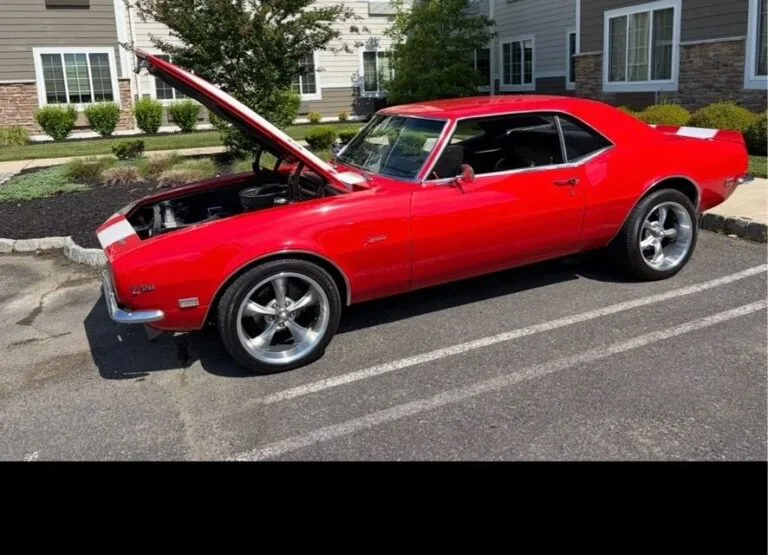 1968 Chevrolet Camaro — Red with white stripes, recent professional work.64 500 €
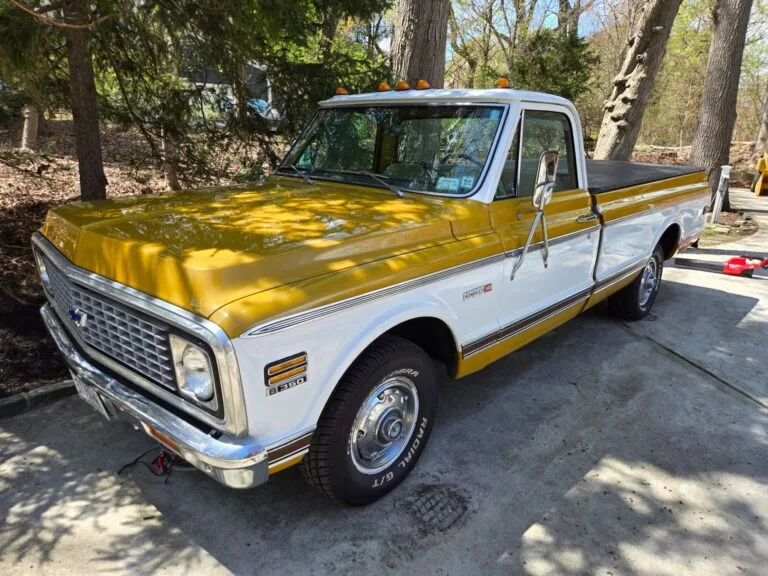 1971 Chevrolet Cheyenne Pickup Truck — Restored, 6,500 miles since restoration.44 500 €
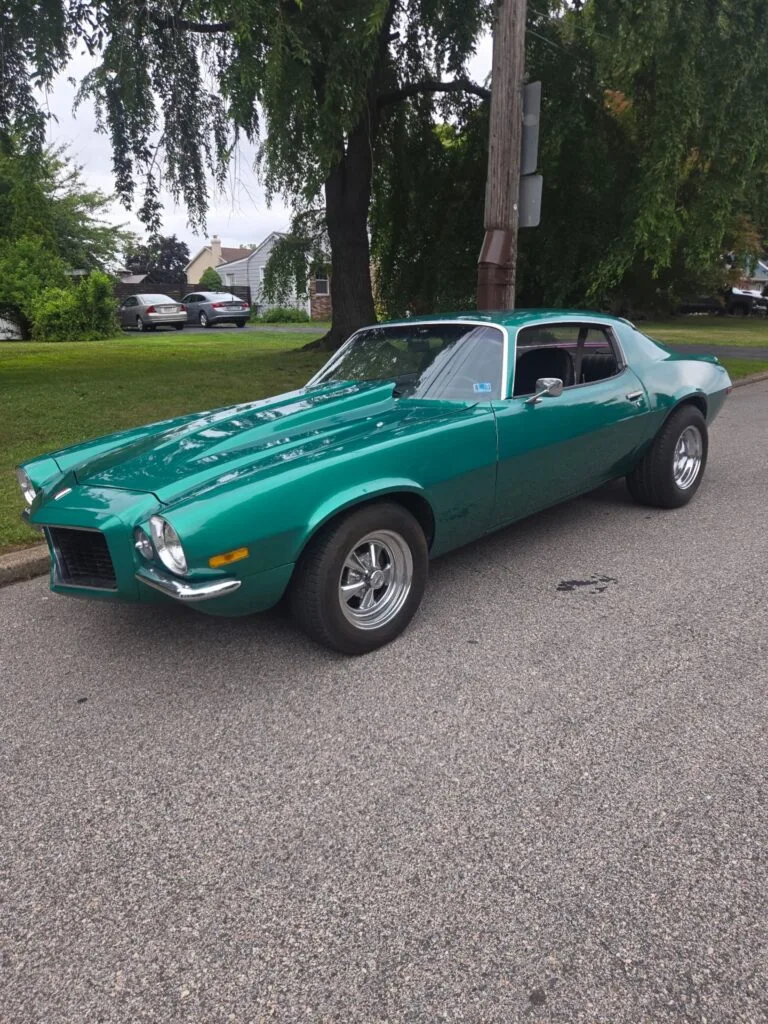 1973 Chevrolet Camaro — Split bumper, 396 big block engine, rebuilt 350 automatic transmission45 500 €
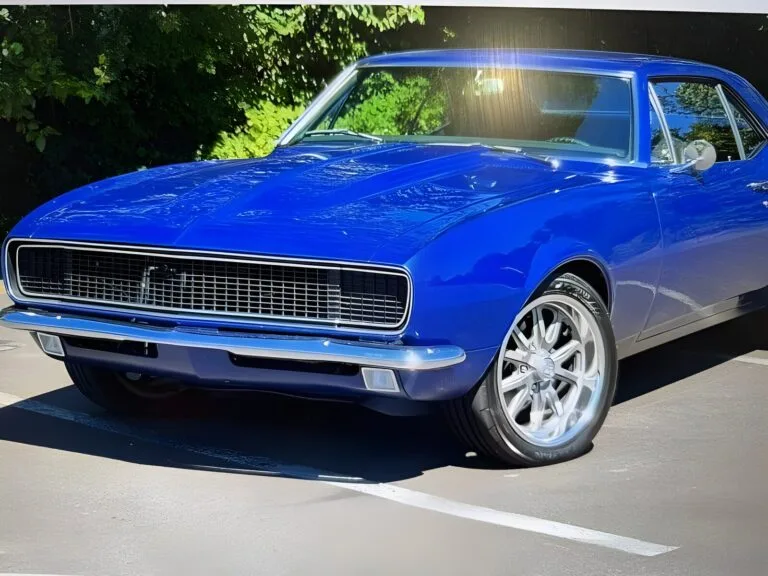 1967 Chevrolet Camaro — 350 V8 engine, 4-speed manual transmission32 000 €
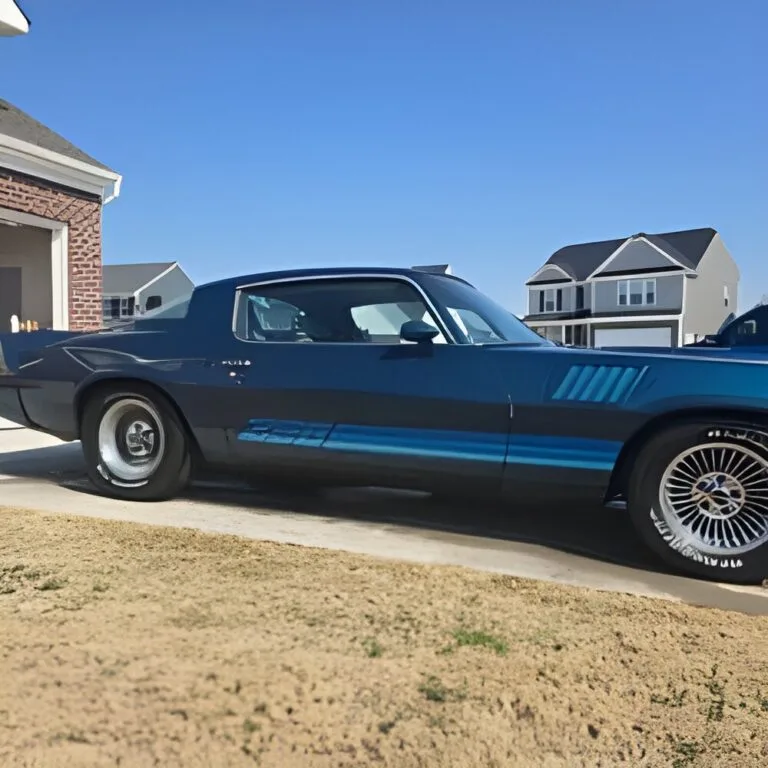 1979 Chevrolet Camaro Z28 — Californian origin with build sheet, LS6/4L60 engine swap producing 400 hp.40 500 €
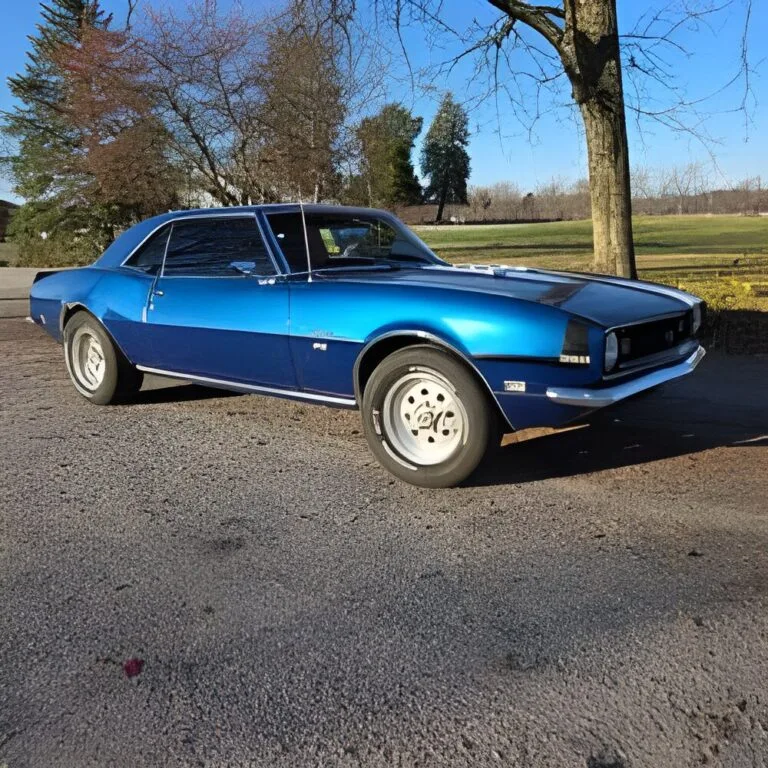 1968 Chevrolet Camaro — New 383 stroker engine, 4-speed manual transmission.50 000 €
View all stock · Can't find the model? We'll look for it for you.
 Portuguese
 English
 French
 Spanish
 Italian
 German
 Dutch